

A hailstorm moves through fast. Ten minutes of hailstones bouncing off the roof, and then it’s over… the sun’s back out, everything looks the same as it did an hour ago. That’s part of what makes hail damage roof problems tricky to catch. The damage is real, but it doesn’t always announce itself the way a fallen tree limb or a missing shingle would.
The team at Turtle Roofing has walked hundreds of roofs after storms across the Midwest, and the same question comes up almost every time: how do you actually know if hail did any damage? Here’s what to look for, where to look, and what happens next if you find something and need hail damage repair.
What Does Hail Damage Look Like on a Roof?
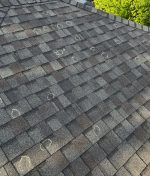
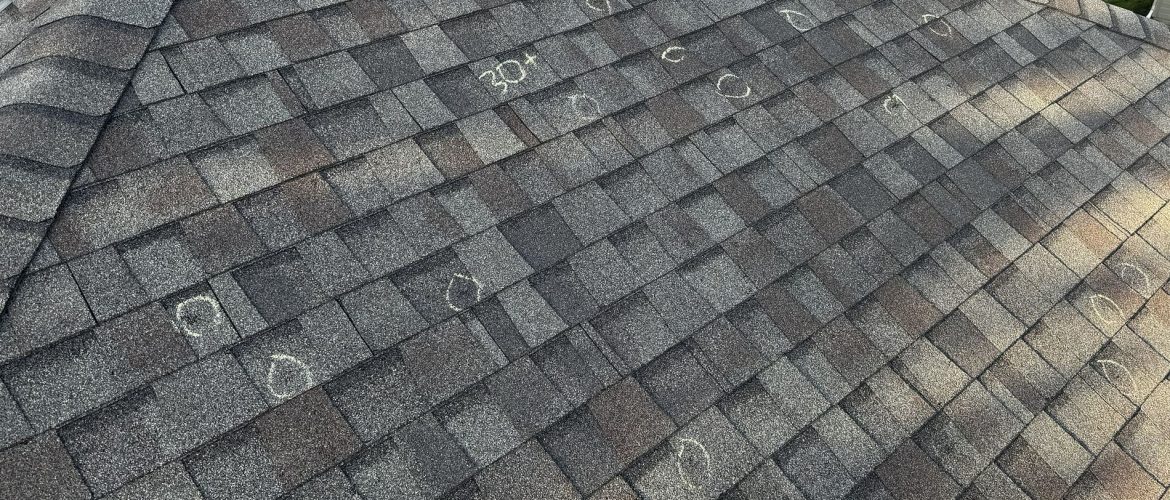
Usually, hail-related roof damage doesn’t look like much from the driveway. Hail rarely punches holes clean through asphalt shingles. Instead, it bruises them, creating a soft spot where the impact drives granules into the shingle mat without breaking the surface open.
From the ground, a bruise is nearly invisible. That’s exactly why so many homeowners skip an inspection after a storm and only discover the problem later, often when a leak shows up during heavy rain.
Hail damage also isn’t limited to the roof. Gutters can dent. Siding can crack or chip. Window screens can tear. If you notice any of those, it’s worth checking the roof, too; hail large enough to leave marks on siding or gutters is large enough to affect roof shingles.
Impact Marks on Asphalt Shingles
On asphalt shingles, look for random, scattered impact marks rather than a uniform pattern. Wear from age tends to show up evenly across a slope; hail impacts show up wherever the stones happened to land, which means some sections of a roof can take real damage while others nearby look untouched. Common signs include:
- Granule Loss: Bald spots where the protective granule layer has been knocked away expose the darker asphalt underneath.
- Bruising: This appears as soft, slightly indented circles you can feel more than see; press gently and the spot gives a little compared to the surrounding shingle.
- Cracking or Splitting: Small fractures radiating from an impact point can worsen with freeze-thaw cycles or continued sun exposure.
Metal Roofing: Dents Over Cracks
Metal roofing handles hail better than most materials, but it isn’t immune. Look for small, rounded dents scattered across panels. They’re often clustered on the slope that faced the storm directly.
Unlike asphalt, metal won’t lose granules or crack, so the damage is almost entirely cosmetic in most cases. That said, dents around seams or fasteners are worth a closer look, since repeated impacts in the same spot can loosen a panel over time. Standing seam roofs tend to show dents more visibly than ribbed or corrugated panels, simply because the flat sections have less give.
What About Tile?
Tile responds to hail very differently than shingles or metal. Instead of bruising or denting, tile tends to crack, chip, or split outright, especially at the edges where it’s thinnest. A cracked tile might not leak right away, but it’s more likely to fail during the next hailstorm or heavy rain, so even minor chipping is worth documenting.
Clay tile is generally more brittle than concrete tile, and older tile roofs that have already weathered a few seasons are more prone to cracking under impact than newer installations.
Additional Things to Check Around Your Property
A hailstorm rarely affects the roof in isolation. Take a walk around the property:
- Siding: Look for cracks, chips, or small holes, especially on the side of the house that faced the wind during the storm.
- Gutters and Downspouts: Check for dents, and clear any debris that could be trapping standing water against the roofline.
- Windows and Screens: Small tears or cracked panes are common in severe hailstorms.
- Landscaping: Shredded leaves or stripped plants are a strong sign the storm carried enough force to affect roofing materials as well.
Look at your car if it was parked outside during the storm; vehicles are one of the clearest indicators of hailstone size, since dents on a hood or roof panel are hard to miss. If your car sustained damage, there’s a good chance your roof did, too. It’s also worth glancing at fences, mailboxes, and outdoor furniture for the same reason.
None of these checks require special tools. They just require knowing what to look for and setting aside a few minutes to walk the yard.
When to Bring in a Professional Roofing Contractor
Ground-level checks are a good starting point, but they only tell part of the story. A roof inspection from a licensed contractor is the only reliable way to determine the full extent of damage, since much of it sits at angles and heights that aren’t visible from below. A professional roofing contractor will typically check every slope, examine flashing and vents, and document any impact marks with photos for insurance purposes.
Protect Yourself After a Storm
There’s also one thing to be aware of: storm chasers. These roofing companies sometimes go door to door after major weather events, offering fast estimates or free inspections. Some are legitimate. Many aren’t licensed or based locally and won’t be around if a repair issue shows up down the road.
It’s worth confirming any contractor’s licensing and local track record before agreeing to work, regardless of how urgent the pitch sounds.
Turtle Roofing has been inspecting and repairing roofs in the Omaha area and across our corner of the Midwest for more than 14 years—we’re not a traveling crew that shows up with a clipboard and a same-day offer only after a big storm. We were here yesterday, we’re here for you today, and we’ll be here years down the road.
Filing a Hail Damage Claim
If an inspection confirms damage to your roofing system, the next step is usually contacting your insurance company. Most homeowners insurance policies cover storm damage, including hail, though coverage details and deductibles vary by policy. An insurance agent can walk through what your specific policy covers and what documentation they’ll need.
Hail claims typically require photos, an inspection report, and sometimes a weather verification showing hail occurred in your area on a given date. A reputable roofing contractor can provide an estimate that lines up with what the insurance company expects to see, which helps keep the claims process moving without unnecessary back-and-forth.
Making Informed Decisions After a Storm
Not every mark on a roof means a full replacement is needed; sometimes it’s a repair, sometimes it’s just cosmetic and doesn’t affect performance. An inspection separates normal wear from damage caused specifically by the storm. Getting ahead of it, before a small crack turns into a bigger leak, is what keeps both your roof and your budget in better shape long term.
If you’ve had recent hail in your area and you’re not sure what you’re looking at, Turtle Roofing offers free inspections to help homeowners get a clear answer before making any decisions about repairs.