

Severe thunderstorms move through the Midwest fast, and they rarely announce how much they took with them. One afternoon of high winds, hail, and flying debris can leave a roof compromised in ways that aren’t obvious from the driveway. Knowing what to do in the hours and days after a storm strikes protects both your home and your ability to get roof damage insurance claim costs covered.
This guide walks through exactly what to check, document, and do first if you suspect roof storm damage at your property.
What to Do Immediately After the Storm
Once it’s safe to assess the property, a few simple steps protect both your home and your insurance claim.
- Take photos of the roof surface, gutters, siding, and yard debris from the ground. Also check the attic and interior walls for water stains, damp insulation, or new water leaks.
- Call a professional roofing contractor for a full inspection before authorizing any repairs.
- Cover any exposed roof deck with a tarp to prevent further damage from wind-driven rain.
- Contact your insurance company promptly to open a claim and confirm your coverage.
Photos taken within the first day or two carry more weight with an insurance company than photos taken weeks later when weather conditions have changed the scene.
1. Start With a Safe Check, Not a Ladder
Resist the urge to climb up and inspect the roof surface yourself right after a severe storm. Downed power lines, unstable tree limbs, and loose shingles can all pose real risk in the immediate aftermath of severe weather.
Walk the perimeter of your home from the ground first and take photos. Look for obvious debris damage in the yard, dented gutters, or shingle pieces scattered across the lawn.
Signs of Storm Damage Roof Repair Needs
Not every storm leaves a hole. Most storm damage roof repair cases start with smaller warning signs that are easy to miss from the ground.
Missing or Loose Shingles
High winds can lift roof shingles at the edges, and wind uplift often dislodges them entirely. Missing shingles or loose shingles at roof edges are usually the first visible signs homeowners spot after a storm.
Hail Damage
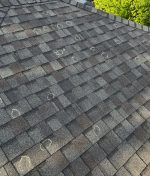
Hail damage often shows up as small dents or bruises on asphalt shingles, granule loss in gutters, or dings on metal roofs and vents. It’s rarely dramatic. A trained eye during a professional roof inspection catches what a homeowner might walk right past.
Wind Damage and Lifted Edges
Wind damage tends to concentrate at roof edges, ridges, and valleys, where uplift pressure is strongest. Curled or cracked shingles in these zones are early indicators of a roof that’s grown vulnerable to future storm damage.
Falling Debris and Impact Marks
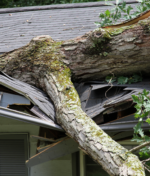
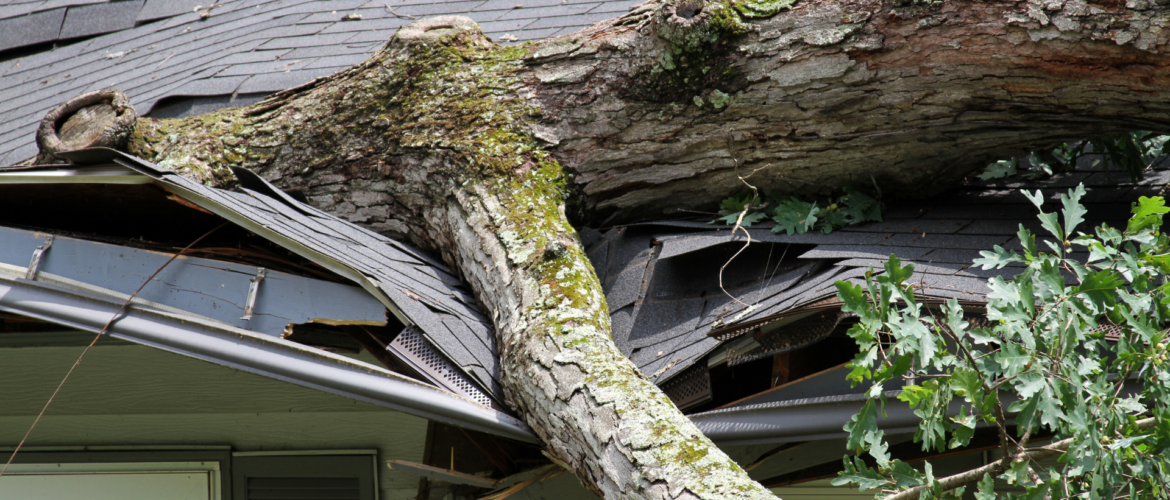
Tree limbs, airborne debris, and other flying debris during a major storm can crack the roof deck or puncture roofing materials outright. Punctures are the fastest path to a roof leak, so any impact marks deserve a closer look.
Interior and Attic Warning Signs
Check your attic for daylight coming through the decking, damp or matted insulation, or streaking along the rafters. Inside the house, water stains on ceilings or interior walls, especially in rooms directly below a suspect area of roof, often mean a leak has already started working its way through. These signs can take days or even weeks to appear after a storm, so it’s worth checking again even if the roof looked fine at first glance.
2. Bring in a Professional Roofing Contractor
A homeowner can spot obvious problems. A professional roofing contractor is trained to catch storm damage that isn’t obvious: soft spots in the roof deck, compromised flashing, or early signs of structural weakening that won’t show symptoms until the next storm season. Skipping this step to save time often means paying for the same roof repairs twice.
Getting on the roof safely is part of the job, not an afterthought. We check weather conditions before climbing up, since a wet or icy roof surface after a storm is one of the more common ways an inspection turns into an injury. Ladders get tied off and stabilized at the roofline, and on steeper pitches or higher homes, we use harnesses and anchor points rather than relying on footing alone.
Walking the roof itself follows a set pattern, moving along the frame and roof deck rather than across open shingle spans, to avoid putting weight where storm damage may have already weakened the structure underneath.
Reliable roofers document damage the way insurance companies expect it documented, with photos, measurements, and material-specific notes. That paperwork is often the difference between an approved claim and a denied one.
What Turtle Roofing Looks for During an Inspection
When you call us after a storm, we walk the roof in person rather than relying on satellite imagery or a quick drive-by. Here’s what that inspection actually covers.
Roof Surface and Shingles
Every roof gets inspected according to what it’s actually made of. We look for cracking, curling, punctures, or displaced material on the surface, along with granule loss or surface wear that points to hail impact. Fasteners, seams, and joints get checked closely too, since those are common failure points no matter the material. These are issues a ground-level view won’t reveal.
Flashing, Roof Edges, and the Roof Deck
Flashing around chimneys, vents, and skylights takes the brunt of wind-driven rain, so we inspect it closely for lifted seams or gaps. Where shingles are missing outright, we check the exposed roof deck underneath for soft spots or moisture intrusion.
Attic and Interior Signs
Storm damage doesn’t always stop at the roofline. We check the attic for daylight coming through the decking, damp insulation, or staining on rafters, since these often point to a roof damage repair need before a ceiling stain ever shows up inside the house.
Gutters and Drainage
We inspect gutters for dents, separation from the fascia, and debris buildup that could lead to pooling or ice dams later in the season.
What Happens Next
After the walkthrough, we give you a written summary of what we found, photos included, along with a straight answer on whether you’re looking at minor repairs or something more involved. If you’re filing a claim, we’ll put that documentation together so you can pass it along to your insurer.
3. Tarp Any Exposed Areas
If shingles are missing or the roof deck is exposed, a tarp is a temporary fix, not a repair. Cover the affected area completely, letting the tarp extend well past the damaged spot on all sides, and secure it with boards or straps rather than nails driven directly into the roof, which can create new points for water to get in.
Wind-driven rain can find its way under a loosely fitted tarp just as easily as through an open gap, so a snug, well-anchored cover matters more than speed.
4. Filing a Roof Damage Insurance Claim
Once you have documentation and a contractor’s assessment in hand, filing the claim itself is mostly a matter of getting the right details to your insurance company quickly and clearly.
- Contact your insurance company and reference the specific storm date.
- Provide photos of the damage along with your contractor’s inspection report.
- Ask for a copy of your policy’s coverage details for wind, hail, and storm-related damage.
- Schedule the adjuster visit as soon as possible, since scheduling backs up after a major storm.
- Keep a written log of every call, email, and claim number for reference.
Most roof damage insurance claim delays come down to missing documentation, not a coverage dispute, so having your paperwork organized before you call tends to move things faster.
Meeting With Your Adjuster
Insurance adjusters look for evidence that damage happened during a specific, dateable event, so tying your claim to a named storm date matters. Pull your local weather report or storm advisory for the date in question and keep it with your claim file.
A roof damage insurance claim typically moves through a few stages: filing the claim, scheduling an adjuster visit, receiving a damage assessment and repair estimates, and finally approving funds for repair or replacement. This claims process can take anywhere from a few days to several weeks, depending on how backed up adjusters are after a major storm.
Bring your own professional roof inspection report to the adjuster meeting if you can get one scheduled first. An independent assessment often catches damage an adjuster’s quick walk-through misses, and it gives you a document to reference if the initial offer feels low.
Repair or Replace: How the Decision Gets Made
Not every storm means a full roof replacement. Minor repairs, such as replacing a section of damaged shingles or resealing flashing, can run a few hundred dollars and resolve isolated issues. Widespread hail bruising, multiple punctures, or damage that compromises the roof structure across a large area usually points toward full replacement instead.
Repair costs and repair estimates should always come from an inspection, not a guess based on the roof’s age. A 15-year-old roof with isolated wind damage may only need minor repairs. A 15-year-old roof with damage spread across every slope may already be past the point where permanent repairs make financial sense.
Don’t Wait for Visible Damage to Get Worse
Roof storm damage can get a whole lot worse if you do nothing between now and the next severe weather event. A small leak left unaddressed can lead to mold growth, sagging in the roof structure, or interior damage that costs far more than the original repair would have. If you’ve noticed any visible signs of damage since the last storm, an inspection now is the cheapest option you’ll have.
Turtle Roofing has helped Midwest homeowners through this exact process for more than 12 years. If you’re unsure whether recent weather left your roof vulnerable, schedule a free inspection and get a straight answer before the next storm makes the decision for you.